Edwin Moses: The Unstoppable Legend of Track and Field
From Olympic Gold to Revolutionizing Athletics and Anti-Doping Standards

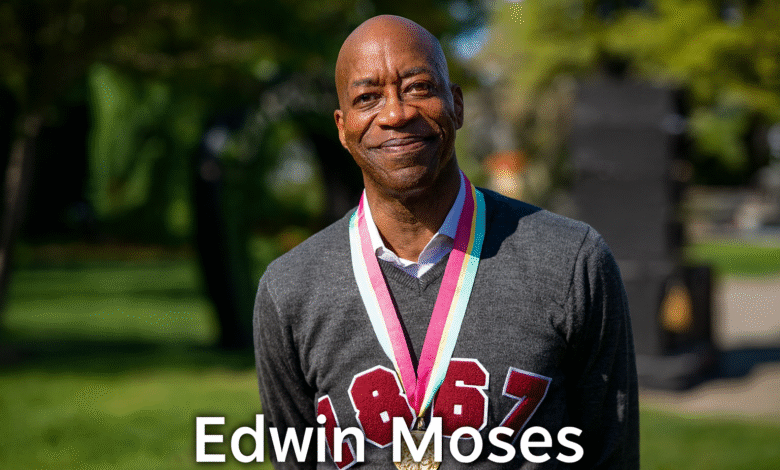
Edwin Moses is not just a name in track and field; he is a symbol of excellence, determination, and innovation. Known for his dominance in the 400-meter hurdles, Moses transformed the world of athletics with his exceptional technique and unwavering discipline. His story is one of talent meeting hard work, intellect blending with physical prowess, and personal ambition paired with global impact. In this article, we explore the life, career, and enduring legacy of Edwin Moses, one of the greatest athletes the world has ever seen.
Quick Bio
| Attribute | Details |
| Full Name | Edwin Corley Moses |
| Date of Birth | August 31, 1955 |
| Age | 70 years (as of 2025) |
| Birthplace | Dayton, Ohio, USA |
| Nationality | American |
| Ethnicity | African-American |
| Accent | American English |
| Education | B.Sc. Physics, Morehouse College; MBA, Pepperdine University |
| Parents | Irving Moses (Father), Gladys Moses (Mother) |
| Children | Julian Moses (Son) |
| Source of Income | Athletics, endorsements, public speaking, sports governance |
| Net Worth | Estimated $5 Million |
| Start of Career | Track and field in high school, professional in 1976 Olympics |
Early Life and Education
Edwin Moses was born on August 31, 1955, in Dayton, Ohio, into a family that valued education and discipline. His father, Irving Moses, was an elementary school principal, and his mother, Gladys Moses, served as a supervisor of instruction. Growing up, Edwin participated in various sports including basketball, football, and gymnastics, yet he eventually gravitated toward track and field due to his natural talent and dedication.
During high school, Moses demonstrated remarkable focus and an analytical mind, qualities that would later define his athletic career. After graduating, he earned an academic scholarship to Morehouse College in Atlanta, Georgia, where he pursued a degree in physics. Despite Morehouse lacking a dedicated track, Moses trained diligently on public high school tracks and honed the skills that would eventually make him a world-class hurdler.
Start of Career and Athletic Rise
Moses’ professional athletic journey began in 1976 when he competed in the Montreal Summer Olympics. Competing in the 400-meter hurdles for the first time on an international stage, he not only won the gold medal but also set a new world record of 47.64 seconds. This remarkable achievement marked the beginning of a decade-long dominance in the sport.
His dedication to technique set him apart. Moses adopted a 13-stride pattern between hurdles, breaking away from the traditional 14-stride approach used by most athletes. This innovation allowed him to maintain speed, conserve energy, and outperform competitors consistently. His analytical approach, rooted in his physics education, contributed to his strategic advantage.
Career Highlights and Achievements
Edwin Moses’ career is defined by extraordinary consistency and groundbreaking achievements. Between August 1977 and May 1987, he won 122 consecutive races, a feat unmatched in track and field history. During this period, he also broke the 400-meter hurdles world record four times, ultimately recording a personal best of 47.02 seconds in 1983.
Moses won two Olympic gold medals (1976 and 1984) and an Olympic bronze in 1988. His dominance extended beyond the Olympics, as he won multiple world championships and earned numerous accolades for his contributions to athletics. Despite the pressure and competition, Moses maintained a near-perfect record, reflecting his mental resilience and strategic brilliance.
Innovative Hurdling Technique
Moses’ success was not just about raw talent; it was his innovative hurdling technique that set him apart. By using a consistent 13-stride rhythm between hurdles, he maximized efficiency and speed. This technique revolutionized the 400-meter hurdles and influenced generations of athletes, showcasing the impact of combining intellect with physical skill.
Challenges and Obstacles
Despite his incredible success, Moses faced challenges, including injuries and the pressure to maintain peak performance over a long career. Additionally, competing during the politically charged 1980 Moscow Olympics boycott prevented him from participating, an event that could have added another Olympic medal to his collection. These setbacks highlight the resilience and determination that defined his journey.
Post-Athletic Career and Business Ventures
After retiring from competitive running, Edwin Moses pursued several professional ventures. He earned an MBA from Pepperdine University, transitioning into business and finance. Moses worked in investment banking and became a prominent speaker and advocate for athlete empowerment.
He also dedicated himself to sports governance and anti-doping initiatives. Moses served on committees within the International Olympic Committee (IOC) and the U.S. Anti-Doping Agency (USADA), helping develop one of the first random out-of-competition drug testing programs. His work has been instrumental in promoting clean sport and fair competition worldwide.
Social Impact and Advocacy
Through the Laureus World Sports Academy, Moses has contributed to social development and youth programs globally. His advocacy emphasizes using sports as a tool for education, health, and community building, demonstrating that an athlete’s influence extends far beyond the track.
Legacy and Influence
Edwin Moses’ legacy is unparalleled in track and field. He is widely regarded as one of the greatest 400-meter hurdlers in history, not only for his victories but also for his innovative technique, strategic approach, and commitment to integrity in sport.
His influence extends beyond athletics; Moses’ work in anti-doping and sports governance has helped shape modern policies that ensure fair competition and athlete support. He continues to inspire athletes, educators, and leaders worldwide, embodying the ideals of discipline, intelligence, and social responsibility.
Conclusion
Edwin Moses’ life exemplifies excellence, perseverance, and innovation. From his humble beginnings in Dayton, Ohio, to becoming a global icon in track and field, his journey demonstrates how talent combined with hard work and strategic thinking can lead to extraordinary success. His contributions to athletics, governance, and social advocacy have left an indelible mark, ensuring that his legacy will inspire generations to come.
Frequently Asked Questions (FAQ)
Q1: What is Edwin Moses’ net worth?
A: Edwin Moses’ estimated net worth is around $5 million, accumulated through his athletic career, endorsements, public speaking, and business ventures.
Q2: How many Olympic medals did Edwin Moses win?
A: He won three Olympic medals: two gold (1976, 1984) and one bronze (1988).
Q3: What was Edwin Moses’ signature hurdling technique?
A: He used a 13-stride pattern between hurdles, a revolutionary approach that maximized efficiency and speed.
Q4: Where did Edwin Moses go to college?
A: He attended Morehouse College in Atlanta, Georgia, earning a degree in physics, and later earned an MBA from Pepperdine University.
Q5: Did Edwin Moses contribute to anti-doping initiatives?
A: Yes, he helped develop random out-of-competition drug testing programs and served on committees promoting clean sport worldwide.
Q6: What are Edwin Moses’ major achievements?
A: He won 122 consecutive races, set multiple world records in the 400-meter hurdles, and earned Olympic medals in three Games.
Q7: What is Edwin Moses’ legacy?
A: His legacy includes athletic excellence, innovative hurdling techniques, anti-doping advocacy, and global social impact through sports.
Q8: Did Edwin Moses face challenges during his career?
A: Yes, including injuries and missing the 1980 Olympics due to the U.S. boycott, yet he maintained dominance in his events.
Q9: Has Edwin Moses been involved in business ventures?
A: He worked in investment banking, public speaking, and sports governance, leveraging his MBA and professional experience.
Q10: Why is Edwin Moses considered an icon?
A: Beyond his records and medals, he revolutionized hurdling, promoted clean sport, and inspired athletes worldwide with his discipline and intelligence.