Understanding Cataract Surgery and Lens Replacement
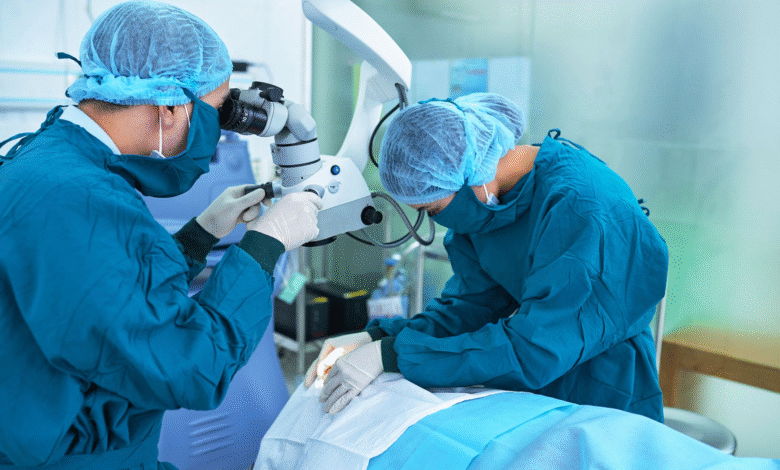
Cataract surgery is one of the most common and successful medical procedures performed worldwide. It involves removing the cloudy natural lens of the eye and replacing it with an artificial lens called an intraocular lens (IOL).
The primary goal of this surgery is to restore clear vision. However, modern advancements have made it possible not only to improve vision but also to reduce dependence on glasses.
Choosing the right type of lens is an important decision that can significantly impact your visual outcome after surgery.
What Is an Intraocular Lens (IOL)?
An intraocular lens (IOL) is a small, clear, artificial lens implanted in the eye during cataract surgery. It replaces the natural lens that has become cloudy due to cataracts.
IOLs are made of materials like silicone or acrylic and are designed to last a lifetime. Unlike contact lenses, they do not require maintenance and cannot be felt once implanted.
Types of Lenses Used in Cataract Surgery
1. Monofocal Lenses
Monofocal lenses are the most commonly used type of IOL. They provide clear vision at one specific distance, either near, intermediate, or far.
Key Features:
- Usually set for distance vision
- Glasses may still be needed for reading or close work
- Covered by most insurance plans
Best For:
People who prefer a simple and cost-effective option and don’t mind wearing glasses for certain tasks.
2. Multifocal Lenses
Multifocal lenses are designed to provide vision at multiple distances, near, intermediate, and far.
Key Features:
- Reduce dependency on glasses
- Use multiple focal points
- May cause glare or halos, especially at night
Best For:
People who want greater independence from glasses and are comfortable adapting to visual changes.
3. Toric Lenses
Toric lenses are specially designed to correct astigmatism, a condition where the cornea has an irregular shape.
Key Features:
- Correct both cataracts and astigmatism
- Provide sharper vision compared to standard lenses
- Require precise positioning during surgery
Best For:
Patients with moderate to high astigmatism.
4. Extended Depth of Focus (EDOF) Lenses
EDOF lenses provide a continuous range of vision, especially improving intermediate vision, such as computer use.
Key Features:
- Fewer visual disturbances compared to multifocal lenses
- Smooth transition between distances
- May still require reading glasses
Best For:
People who want improved intermediate vision with minimal side effects.
5. Accommodating Lenses
Accommodating lenses are designed to move slightly within the eye, mimicking the natural focusing ability of the eye.
Key Features:
- Respond to eye muscle movement
- Provide a better range than monofocal lenses
- Results can vary among patients
Best For:
Patients who want a more natural focusing experience.
How to Choose the Right Lens
Choosing the right IOL depends on several factors, including:
Lifestyle Needs
If you frequently use digital devices, drive at night, or read often, your lens choice may vary.
Eye Health
Conditions like astigmatism, macular degeneration, or glaucoma can influence lens selection.
Budget Considerations
Premium lenses like multifocal or toric lenses may cost more than standard monofocal lenses.
Doctor’s Recommendation
An ophthalmologist evaluates your eye condition and suggests the most suitable option.
In cities like Patiala, patients exploring options for vision correction commonly compare lens types while searching for eye care centers offering the best cataract surgery in Patiala to ensure optimal outcomes based on their specific eye needs.
Benefits of Modern Cataract Lenses
Modern IOLs offer several advantages:
- Improved vision clarity
- Reduced dependence on glasses
- Enhanced quality of life
- Long-lasting and safe
Advancements in technology have made cataract surgery not only a vision-restoring procedure, but also a vision-enhancing one.
Risks and Considerations
While cataract surgery is generally safe, some considerations include:
- Temporary blurry vision after surgery
- Possible glare or halos (especially with multifocal lenses)
- Rare complications like infection or lens displacement
Discussing these risks with your doctor helps in making an informed decision.
Frequently Asked Questions (FAQs)
1. Which lens is best for cataract surgery?
There is no one-size-fits-all answer. The best lens depends on your vision needs, lifestyle, and eye condition. Monofocal lenses are widely used, while premium lenses offer more flexibility.
2. Can I completely avoid glasses after surgery?
Some premium lenses, like multifocal or EDOF lenses, can reduce the need for glasses, but complete independence is not guaranteed for everyone.
3. Are premium lenses worth it?
Premium lenses can provide better visual range and convenience, but they come at a higher cost. The decision depends on your preferences and budget.
4. How long do intraocular lenses last?
IOLs are designed to last a lifetime and generally do not need replacement.
5. Is cataract surgery painful?
The procedure is usually painless and performed under local anesthesia. Most patients experience minimal discomfort.
Conclusion
Cataract surgery has evolved significantly, offering a variety of lens options tailored to individual needs. From basic monofocal lenses to advanced multifocal and toric lenses, each type provides unique benefits.
Understanding the differences between these lenses can help you make an informed decision and achieve the best possible vision outcome. Always consult with a qualified eye specialist to determine the most suitable lens for your eyes and lifestyle.