Artificial intelligence has accelerated rapidly in the last few years, but few areas have advanced as noticeably—and as visually—as lip sync technology and image to video generation. What once required full production teams, motion-capture rigs, and professional animators can now be executed with a single image and seconds of computation. These innovations are reshaping entertainment, marketing, digital communication, and even the fundamentals of how we create visual content.
The Rise of Precision Lip Sync AI
A lip sync AI began as a promising but imperfect technology. Early systems often produced rigid mouth movements, uncanny expressions, and awkward timing. Today, however, modern models combine natural language processing, facial biomechanics, and sophisticated audio-to-motion learning to generate remarkably accurate lip movement.
The most notable improvement is contextual awareness. Advanced models don’t simply match mouth shapes to phonemes—they analyze emotional tone, pacing, volume, and even breath patterns in the audio. This creates subtle micro-expressions that make the result appear genuinely human rather than robotic. Slight jaw tension for louder syllables, lip pursing for softer moments, or natural asymmetry during fast speech all contribute to realism.
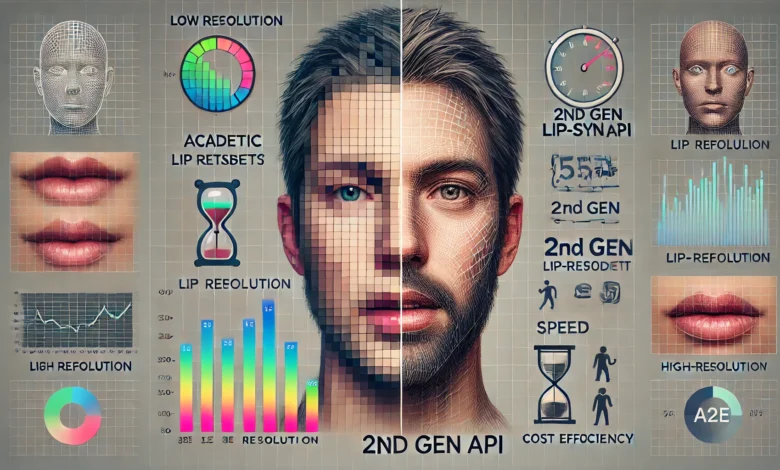
Another breakthrough is identity preservation. Earlier lip sync tools struggled to maintain a person’s facial structure when animating speech. Today’s systems use high-resolution facial meshes and 3D generative models that map the original face more accurately, preventing distortion and retaining the subject’s unique traits. This is one reason lip sync AI has become so popular in dubbing, entertainment, and virtual production.
Image to Video in a Single Step
While lip sync AI animates existing footage, the newer image to video models go a step further: they create full-motion video from a single still image. This capability was nearly unimaginable a decade ago, but multimodal diffusion architectures and transformer-based video models have made it a reality.
The secret behind these advancements is the use of temporal diffusion, a method that generates each frame while maintaining consistent motion and visual coherence. Instead of creating random, jittery frames, the model forecasts movement over time, producing smooth gestures, natural head turns, and even environmental effects such as shifting light or subtle shadows.
Modern image to video systems incorporate multiple layers:
- Identity Encoding – Analyzing facial structure, skin texture, hairstyle, and lighting in the input image.
- Motion Modeling – Predicting realistic movements such as nods, blinks, and emotional expressions.
- Temporal Consistency – Ensuring each frame aligns with the next so the output video looks natural.
- Audio Integration (Optional) – When paired with lip sync AI, the system can generate talking-head videos from just an image and a script.
This capability has enabled a new generation of storytelling tools. Educators, marketers, filmmakers, and solo creators can now bring characters to life without cameras, expensive sets, or professional actors.
Applications Transforming Industries
The combination of lip sync AI and image to video technology is reshaping multiple fields:
1. Film and Media Production
Studios use AI-driven lip sync to create accurate dubs in dozens of languages. Instead of replacing voices alone, AI modifies mouth movements to match the new dialogue, giving global audiences a more immersive experience. AI-generated stand-ins and virtual actors are also becoming common during pre-visualization and low-budget shoots.
2. Marketing and Advertising
Brands can create customized video messages at scale. With a single portrait, marketers can generate hundreds of localized videos in different languages, each presented by the same spokesperson, without needing reshoots.
3. Education and Training
Teachers and trainers use AI avatars to produce instructional videos quickly. AI-powered historical figures, scientists, and virtual mentors can now “speak” directly to learners.
4. Gaming and Virtual Worlds
Lip sync AI brings NPCs (non-player characters) to life with conversational realism. An image to video AI techniques allow developers to create dynamic character animations with minimal manual work, speeding up production cycles.
5. Accessibility and Communication
For individuals who have lost the ability to speak, AI-driven lip sync avatars can translate text or synthetic speech into expressive video, preserving aspects of identity and emotional nuance.
Ethical Considerations and Guardrails
As with all generative AI breakthroughs, these tools raise ethical questions. Ultra-realistic talking-head videos can be misused for deepfakes, impersonation, or misinformation. Fortunately, content authenticity systems, watermarking, and AI-generated signature patterns are being incorporated into many modern models. Clear labeling, strict platform policies, and digital provenance standards are evolving alongside the technology.
Developers are also implementing features that prevent unauthorized creation of videos using real individuals without consent. Some tools now require proof of permission or block known celebrity likenesses to mitigate misuse.
The Road Ahead
While the current capabilities are impressive, the next generation of lip sync and image to video systems will likely push the boundaries even further:
- Multishot consistency: generating long, multi-scene videos from a handful of images.
- Full-body synthesis: moving beyond head-and-shoulder shots to photorealistic animated characters.
- Interactive avatars: real-time conversational agents capable of natural gestures and emotional nuance.
- Ultra-high-fidelity realism: matching cinematic-level lighting, physics, and texturing.
These innovations will continue blurring the line between traditional filmmaking and AI-augmented creation. For creators, it marks a new era of accessible and efficient visual storytelling. For society, it demands thoughtful governance and responsible use. But there is no doubt: lip sync AI and image to video generation are transforming digital media at a pace that was hard to imagine just a few years ago.